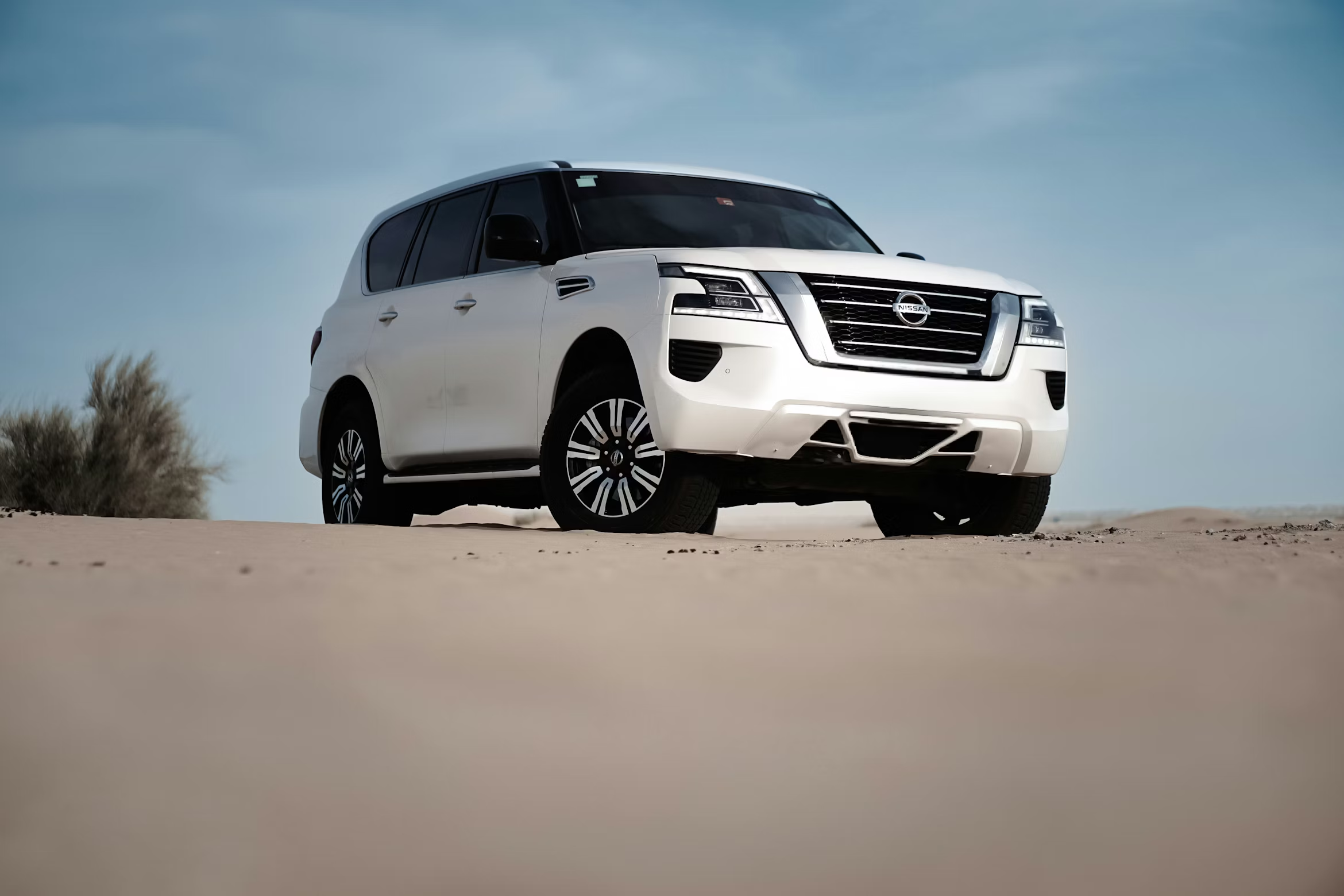
Quick answer: For UAE's extreme heat (45-50°C ambient), Nissan Patrol Y62 and Y61 models need a full synthetic oil with API SN Plus rating and excellent thermal stability. Change intervals should be reduced to 5,000-7,500km due to harsh conditions including sand, humidity, and heavy traffic on Dubai's roads.
Not sure what yours is due for? Send the year and the mileage and we will tell you which service it actually needs.
Check what yours needs →Dubai's scorching summer heat pushes every vehicle component to its limits, but your Nissan Patrol's engine oil faces the toughest challenge. When tarmac temperatures on Sheikh Zayed Road hit 70°C+ and ambient air reaches 50°C, choosing the wrong oil can mean the difference between reliable desert adventures and a costly engine rebuild. Oil-related damage on a Patrol can often be prevented with the right lubricant choice. Whether you're commuting through Dubai's stop-and-go traffic or tackling the dunes at Big Red, your Patrol's engine oil needs to handle thermal breakdown, oxidation, and contamination from sand and salt air. The Nissan Patrol's evolution from the Y61 Super Safari to the latest Y63 flagship means different engine requirements, but all face the same brutal UAE climate that demands premium protection.
What Makes UAE Heat So Damaging to Engine Oil?
UAE's extreme temperatures accelerate oil breakdown at twice the normal rate, causing viscosity loss and thermal oxidation that leaves your Patrol's VK56VD 5.6L V8 vulnerable to wear.
Dubai's climate creates a perfect storm for oil degradation. Ambient temperatures of 45-50°C combined with engine heat can push oil temperatures beyond 150°C, well into the danger zone where conventional oils begin breaking down rapidly. After hard highway driving, oil in a Y62 can literally cook, turning black and losing its protective properties within just a few thousand kilometers.
The coastal humidity adds another challenge — salt-laden air causes corrosion while sand particles create abrasive contamination. Stop-and-go traffic on Sheikh Mohammed Bin Zayed Road means your engine rarely reaches optimal operating temperature for long periods, leading to fuel dilution and moisture buildup. Off-road adventures to Al Qudra and Liwa introduce fine sand particles that act like grinding paste if your oil can't keep them in suspension.
Heat cycling is particularly brutal — your Patrol might sit in 50°C parking lots, then immediately face high-load driving. This thermal shock breaks down oil molecules and depletes additives faster than manufacturers anticipate. Standard 10,000km service intervals become dangerous in these conditions, which is why we recommend cutting them in half for UAE-driven Patrols.
Which Oil Viscosity Works Best for Y62 and Y61 Models?
Y62 Patrols perform best with a full synthetic, while Y61 Super Safari models can also run a slightly thicker oil depending on mileage and condition.
The Y62's VK56VD engine was designed for modern low-viscosity oils that provide better fuel economy and faster cold-start protection. However, UAE heat demands oils that maintain viscosity under extreme temperatures. We've found a quality full synthetic strikes the right balance — thin enough for quick morning starts but stable enough to protect during afternoon heat.
For high-mileage Y61 models (many now have 200,000+ km), slightly thicker oil can help maintain oil pressure and reduce consumption through worn seals. The older engines were designed for conventional oils but benefit enormously from synthetic technology's thermal stability. Nissan UAE's official specifications provide baseline requirements, but real-world Dubai conditions often demand upgrades.
Avoid very thin, low-viscosity oils unless specifically recommended — while excellent for fuel economy, they can thin excessively in extreme heat. Similarly, heavy "racing" oils are unnecessarily thick for modern Patrols and can actually increase wear during cold starts, which still happen even in summer due to overnight air conditioning in garages.
Brand matters less than specification — look for oils meeting API SN Plus or SP standards with proven thermal stability. We stock Mobil 1, Castrol GTX Magnatec, and Shell Helix Ultra, all of which perform excellently in our local conditions when matched to proper viscosity grades.
How Often Should You Change Oil in Dubai's Climate?
Reduce standard oil change intervals by 30-50% in UAE conditions — aim for 5,000-7,500km for synthetic oils and 3,000-5,000km for conventional oils.
Nissan's global recommendations of 10,000km intervals assume moderate climates and normal driving conditions. Dubai driving is anything but normal — it's classified as "severe duty" by most manufacturers due to extreme heat, dust, and traffic patterns. We've analyzed oil samples from UAE-driven Patrols and consistently find breakdown products appearing around 6,000-7,000km, well before standard change intervals.
Your driving pattern affects change frequency significantly. Pure highway driving to Abu Dhabi allows longer intervals than city commuting with constant start-stop cycles. Off-road enthusiasts should change oil immediately after major desert trips — sand ingestion and high engine loads can contaminate oil rapidly. We've seen cases where a single challenging dune bashing session required immediate oil changes due to sand contamination.
Time matters as much as distance — oil sitting in 50°C heat for months degrades even without driving. If you drive less than 10,000km annually, change oil every 6 months regardless of mileage. Chemical breakdown continues even in stationary engines, especially with fuel dilution from frequent short trips around Dubai.
Oil analysis services can help optimize your change intervals, and a 6-month or 6,000km interval is a sensible default without unnecessary expense. Set against the cost of a major engine repair, proper oil changes are incredibly cheap insurance.
What Oil Specifications Should You Look For?
Choose oils with API SN Plus or newer ratings, ACEA A3/B4 European standards, and additives specifically designed for high-temperature oxidation resistance.
API (American Petroleum Institute) ratings tell you about oil quality and compatibility. SN Plus specifically addresses Low-Speed Pre-Ignition (LSPI), a phenomenon that can destroy modern turbocharged engines, though less relevant to naturally aspirated Patrol engines. However, SN Plus oils generally have better additive packages for thermal stability.
ACEA European standards are often more demanding than API ratings. A3/B4 classifications require oils to withstand high temperatures and extended drain intervals — exactly what UAE conditions demand. These oils typically have better thermal stability and lower volatility, meaning they don't evaporate as quickly in extreme heat.
Look for specific additives: thermal breakdown inhibitors prevent oil thickening in heat, while anti-oxidants slow chemical degradation. Dispersants keep contaminants suspended rather than forming sludge, crucial for dusty UAE conditions. Anti-wear additives like zinc dialkyldithiophosphate (ZDDP) protect engine components during high-temperature operation.
OEM approvals matter — Nissan-approved oils have been tested in similar climate conditions. However, don't limit yourself only to Nissan-branded oils, which are often rebranded products from major oil companies at premium prices. Focus on meeting or exceeding specifications rather than brand loyalty.
Does Synthetic vs Conventional Oil Matter in Extreme Heat?
Full synthetic oil provides significantly better thermal stability and protection in UAE heat compared to conventional oils, easily justifying the price premium.
Synthetic oils are engineered molecules designed for consistent performance across temperature ranges, while conventional oils are refined petroleum with natural molecular variations. In Dubai's heat, this difference becomes critical — synthetic oils maintain viscosity and protective properties at temperatures that would break down conventional oils completely.
We've documented cases where conventional oils turned to sludge after just 3,000km of summer driving, while full synthetic oils remained clean and protective at 7,500km under identical conditions. The thermal stability difference is dramatic — synthetic oils typically handle temperatures 20-30°C higher before beginning to break down.
Semi-synthetic (synthetic blend) oils offer a compromise but don't provide the full benefits needed for extreme conditions. In UAE heat, they tend to perform only marginally better than conventional oils while costing significantly more. For the price difference, full synthetic is always the better choice for serious protection.
The cost argument favors synthetic when you factor in extended change intervals and engine protection. Synthetic oil costs more than conventional, but you can safely double the change interval while providing superior protection. Engine repairs from oil-related damage cost far more, making premium oil an obvious investment.
Common Oil-Related Problems in Dubai Patrols
The most frequent issues include accelerated oil consumption, timing chain stretch from inadequate lubrication, and VVT system problems caused by oil breakdown in extreme heat.
Y62 models commonly develop oil consumption issues around 80,000-120,000km, often accelerated by using incorrect viscosity or low-quality oils in UAE heat. We see cases requiring top-ups every 1,000-2,000km instead of normal 5,000-8,000km intervals. While some consumption is normal, excessive consumption often traces back to inadequate oil protection during thermal cycling.
Timing chain problems plague both Y61 and Y62 models when oil changes are extended beyond safe intervals. Dubai heat breaks down oil's lubricating properties, leading to chain stretch and eventual timing issues. We've replaced timing chains on Y62s with as little as 60,000km due to poor oil maintenance — repairs that could be prevented with proper oil selection and changes.
Variable Valve Timing (VVT) systems in Y62 engines are particularly sensitive to oil quality. Contaminated or broken-down oil clogs the small passages controlling valve timing, leading to rough idle, reduced power, and check engine lights. Cleaning the VVT system costs less than replacing it.
Sludge buildup is common in Patrols that see extended oil changes or low-quality oils. Dubai's stop-and-go traffic patterns contribute to sludge formation, which restricts oil flow and can cause complete engine failure. We've seen engines with less than 100,000km require complete rebuilds due to sludge-related damage.
Frequently Asked Questions
What happens if I use the wrong oil in Dubai heat?
Wrong oil viscosity or quality can lead to accelerated engine wear, timing chain problems, and complete engine failure in extreme UAE temperatures. When inappropriate oils are used in Dubai's harsh climate, we see repairs ranging from timing chain replacement to complete engine rebuilds, both far more expensive than the right oil.
Can I use a much thicker oil in my Patrol for extra protection?
A much thicker oil isn't recommended for modern Patrols as it can increase wear during startup and reduce fuel economy without providing meaningful benefits. Stick to a quality full synthetic, which provides better protection in both extreme heat and cooler morning temperatures.
How do I know if my Patrol's oil is breaking down too quickly?
Check oil color and consistency every 2,000km — healthy oil should remain amber to dark brown and flow smoothly. If oil turns black, feels gritty, or has a burnt smell before 5,000km, you're either using inadequate oil for UAE conditions or have underlying engine problems requiring immediate attention.
Is expensive oil worth it for older Y61 Super Safari models?
Yes, high-quality synthetic oil becomes more important as engines age, not less. Older Y61 engines with 150,000+ km benefit enormously from synthetic oil's thermal stability and cleaning properties, often reducing oil consumption and extending engine life significantly compared to conventional oils.
When to Bring Your Patrol to Patrol Garage
If you're experiencing excessive oil consumption, unusual engine noises, or aren't sure about the right oil for your Patrol's specific needs in Dubai conditions, Patrol Garage specializes in the Y62. We stock the correct oils for UAE conditions and can diagnose oil-related problems before they become expensive repairs. RTA registration requirements also mandate proper vehicle maintenance, making regular oil service essential for legal compliance as well as engine protection. Here is what we do to a Y62, job by job.
Last updated: May 2026