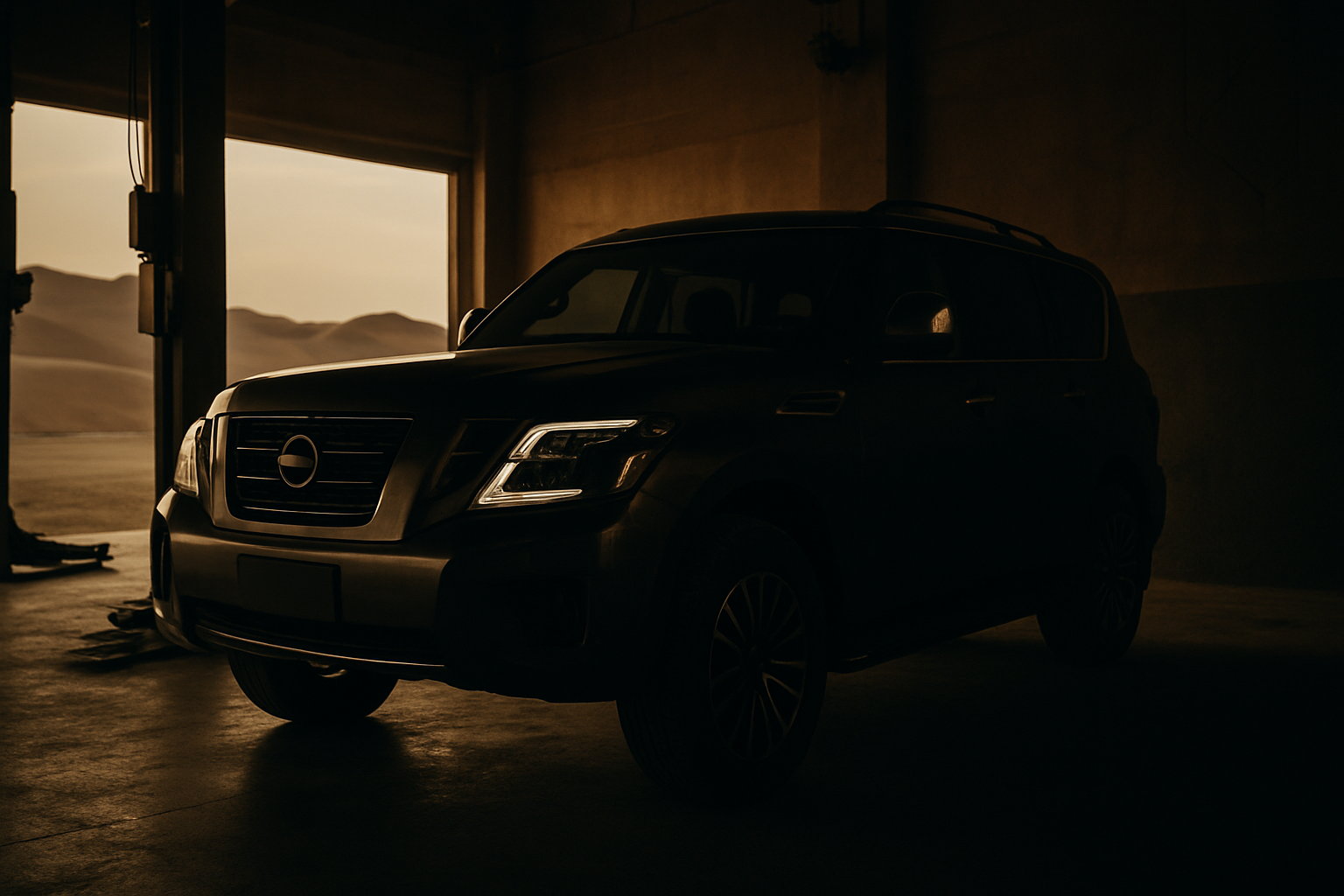
Quick answer: Nissan Patrol models in Dubai require service every 6,000 km or 6 months, whichever comes first, due to extreme heat and dusty conditions. Y62 and Y63 models need major services every 20,000 km including transmission fluid changes, while the older Y61 Super Safari follows a 10,000 km major service cycle.
Dubai's extreme climate puts your Nissan Patrol through conditions that would challenge any vehicle. With summer temperatures soaring to 50°C and road surfaces reaching 70°C+, combined with constant sand ingress and heavy stop-and-go traffic on Sheikh Zayed Road, your Patrol needs more frequent attention than vehicles in temperate climates. We've been servicing Patrols in Ras Al Khor for years, and we see firsthand how Dubai's unique environment accelerates wear on everything from engine oil to transmission components. The good news? Following the right service intervals keeps your Patrol running strong whether you're navigating Business Bay traffic or conquering the dunes at Big Red. This comprehensive guide breaks down exactly when and what your Patrol needs, with specific intervals for the Y61 Super Safari, Y62, and the new Y63 models. We'll cover everything from basic oil changes to major component services, giving you the knowledge to keep your investment protected and your family safe on UAE roads.
What Are the Basic Service Intervals for Nissan Patrol in Dubai?
All Nissan Patrol models sold in the UAE require service every 6,000 km or 6 months due to severe operating conditions classified by extreme heat, dust, and frequent short trips.
Dubai's harsh environment means your Patrol operates under what manufacturers classify as "severe duty" conditions. The RTA requires annual vehicle inspections, but your Patrol needs attention far more frequently than that. We recommend never exceeding 6,000 km between services, regardless of your driving style. The VK56VD 5.6L V8 in Y62 and Y63 models generates significant heat, and Dubai's extreme temperatures compound this stress. Even if you primarily drive highway miles between emirates, the combination of heat and dust ingress means engine oil breaks down faster than in moderate climates.
Your service schedule should follow this pattern: minor service at 6,000 km intervals, intermediate service at 12,000 km, and major service at 20,000 km for Y62/Y63 models. The Y61 Super Safari follows a slightly different pattern with major services at 10,000 km intervals due to its older engine design and different operating parameters.
How Often Should You Change Transmission Fluid in Dubai Heat?
Y62 and Y63 Patrol transmission fluid should be changed every 40,000 km in Dubai conditions, not the 80,000 km specified in moderate climates, due to extreme heat stress on the 7-speed Jatco transmission.
We see more transmission failures in Dubai than anywhere else, and heat is the primary culprit. The Jatco JR710E transmission in your Y62 operates under extreme stress when ambient temperatures hit 45°C and you're sitting in Sheikh Mohammed Bin Zayed Road traffic. Transmission fluid breaks down rapidly in these conditions, losing its protective properties and causing internal components to wear prematurely.
A transmission fluid change costs between AED 600—1,200, while a rebuild ranges from AED 8,000—18,000. We always recommend the preventive approach. During transmission service, we also inspect the cooler lines and ensure the transmission cooler isn't blocked with sand or debris — a common issue for vehicles that frequent off-road areas like Al Qudra or Liwa.
For Y61 Super Safari models with the older 4-speed automatic, we recommend fluid changes every 30,000 km due to the transmission's age and less sophisticated cooling systems compared to modern units.
What Engine Maintenance Does Dubai's Climate Demand?
Dubai's extreme heat requires high-temperature engine oil specifications and more frequent cooling system attention, with radiator flushes needed every 40,000 km instead of standard 80,000 km intervals.
The VK56VD 5.6L V8 in your Y62 or Y63 generates 400hp, which creates substantial heat even under normal conditions. Add Dubai's 50°C ambient temperatures and the engine operates near its thermal limits daily. We always use high-temperature synthetic oils meeting Nissan's specifications — typically 0W-20 or 5W-30 grades designed for extreme heat operation.
Cooling system maintenance becomes critical here. We see radiators clogged with sand and salt from coastal humidity, reducing cooling efficiency just when your engine needs it most. The Ministry of Climate Change and Environment has documented how coastal humidity and inland dust create corrosive conditions that accelerate cooling system degradation.
Beyond regular coolant changes, we inspect the radiator, water pump, and thermostat more frequently than standard schedules suggest. Engine overheating repairs can cost AED 15,000—35,000, making preventive maintenance a smart investment. Air filter changes should happen every 10,000 km rather than 20,000 km due to Dubai's dusty environment.
When Should You Service Air Conditioning and Cabin Systems?
AC systems in Dubai require pre-summer servicing every March, with refrigerant top-ups and compressor checks essential before temperatures reach 45°C to prevent costly failures during peak season.
Your Patrol's AC system works harder in Dubai than almost anywhere else on earth. We see compressor failures spike in June and July when owners discover their AC can't cope with the demand. Pre-summer servicing in March or April prevents these expensive failures — an AC compressor replacement costs AED 2,500—5,000, while annual maintenance costs around AED 400.
Cabin air filters need changing every 10,000 km due to sand ingress and dust. We also clean the evaporator coils annually to prevent the musty odors that develop from condensation in Dubai's humidity. The condenser, mounted in front of your radiator, collects sand and debris that reduces cooling efficiency.
For owners who frequently drive off-road, we recommend monthly visual checks of the condenser for damage from sand and rocks. Even small punctures can lead to complete refrigerant loss and system failure during the hottest months when you need AC most.
What Suspension and Steering Maintenance Does Off-Road Use Require?
Patrol owners who use desert tracks should inspect suspension components every 20,000 km, with complete overhauls needed every 80,000—100,000 km due to sand abrasion and impact stress.
Dubai's location makes off-road driving irresistible — Big Red is just an hour away, and Al Qudra offers endless tracks. However, desert driving accelerates suspension wear dramatically. Sand acts like an abrasive, working into bushings and joints, while repeated impacts from dune drops stress shock absorbers and springs beyond normal limits.
We inspect ball joints, tie rod ends, and shock absorbers more frequently for off-road enthusiasts. Complete suspension overhauls range from AED 4,000—12,000 depending on which components need replacement. The Y62 and Y63 hydraulic body motion control system requires special attention — these complex systems don't tolerate sand ingress well.
Even if you don't intentionally go off-road, Dubai's construction zones and unpaved areas stress suspension components. We recommend annual alignment checks and suspension inspections to catch wear early before it becomes dangerous or expensive.
How Do You Maintain Brakes in Stop-and-Go Dubai Traffic?
Heavy Dubai traffic and extreme heat accelerate brake wear, requiring pad inspections every 10,000 km and complete brake fluid changes annually instead of the standard 2-year interval.
Sheikh Zayed Road traffic during rush hour creates the worst possible conditions for brake systems. Repeated hard stops from highway speeds generate enormous heat, while stop-and-go crawling prevents proper cooling between applications. Your Patrol's substantial weight — over 2,700 kg for Y62 models — makes this even more challenging.
Brake fluid absorbs moisture from Dubai's coastal humidity, lowering its boiling point and reducing effectiveness when brakes get hot. We see brake fade and premature component wear when owners skip annual fluid changes. Complete brake services including pads, rotors, and fluid typically cost AED 1,500—3,000 depending on which components need replacement.
For owners who tow boats or trailers — common activities in the UAE — we recommend even more frequent brake inspections. The additional weight stress combined with Dubai's demanding conditions can wear brake components rapidly.
What Special Maintenance Do Y63 Models Need?
The new Y63 Patrol requires updated service procedures including advanced driver assistance system calibrations and new transmission software that older Dubai workshops may not have equipment to service properly.
The 2024 Y63 represents a complete redesign with sophisticated electronic systems that require specialized diagnostic equipment and training. While basic maintenance like oil changes remain similar, the advanced safety systems, updated transmission programming, and new engine management systems need workshops equipped with the latest Nissan diagnostic tools.
Early Y63 models may require software updates addressing Dubai-specific conditions. We've seen updates related to transmission behavior in extreme heat and AC performance optimization for Gulf climates. These updates require genuine Nissan diagnostic equipment and certified technicians familiar with the new systems.
The Y63's more complex electronics also mean greater sensitivity to voltage fluctuations and heat stress. We recommend more frequent battery testing and electrical system checks compared to older Patrol models. Dubai's heat is particularly hard on modern vehicle electronics, making preventive electrical system maintenance crucial for reliability.
Frequently Asked Questions
How much does major Patrol service cost in Dubai?
Major Patrol service in Dubai typically costs AED 800—2,500 depending on the model and workshop. This includes engine oil, filters, fluid top-ups, and comprehensive inspections. Y62 and Y63 models cost more due to larger oil capacity and more complex systems requiring specialized knowledge.
Can I extend service intervals if I only drive on highways?
No, Dubai's extreme heat and dust mean all driving conditions are considered "severe duty" regardless of road type. Even highway-only driving exposes your Patrol to 50°C temperatures and constant dust ingress. We never recommend exceeding 6,000 km service intervals in UAE conditions.
What's the difference between Y61 and Y62 service requirements?
Y61 Super Safari models follow 10,000 km major service intervals while Y62/Y63 models use 20,000 km major service cycles. The Y62's more advanced systems require specialized diagnostic equipment and different fluid specifications. Y61 models are simpler but may need more frequent attention due to their age.
Should I service at the dealer or independent workshop?
Independent specialists like Patrol Garage often provide better value and personalized service while maintaining manufacturer standards. We use genuine parts and follow Nissan procedures but typically cost 20—30% less than dealers. Choose workshops with Nissan-trained technicians and proper diagnostic equipment.
When to Bring Your Patrol to Patrol Garage
Don't wait for problems to develop. We recommend booking your service 1—2 weeks in advance, especially before summer months when demand peaks. Our Ras Al Khor workshop specializes exclusively in Patrol models, with technicians who understand the unique challenges of Dubai driving conditions. We'll keep your Patrol running reliably whether you're commuting to Downtown Dubai or exploring the Empty Quarter.
Last updated: May 2026